
Explore Ideation Methods
Each method is a structured approach to generating and exploring ideas. Learn how each one works, when to use it, and how to get the most out of your ideation session.
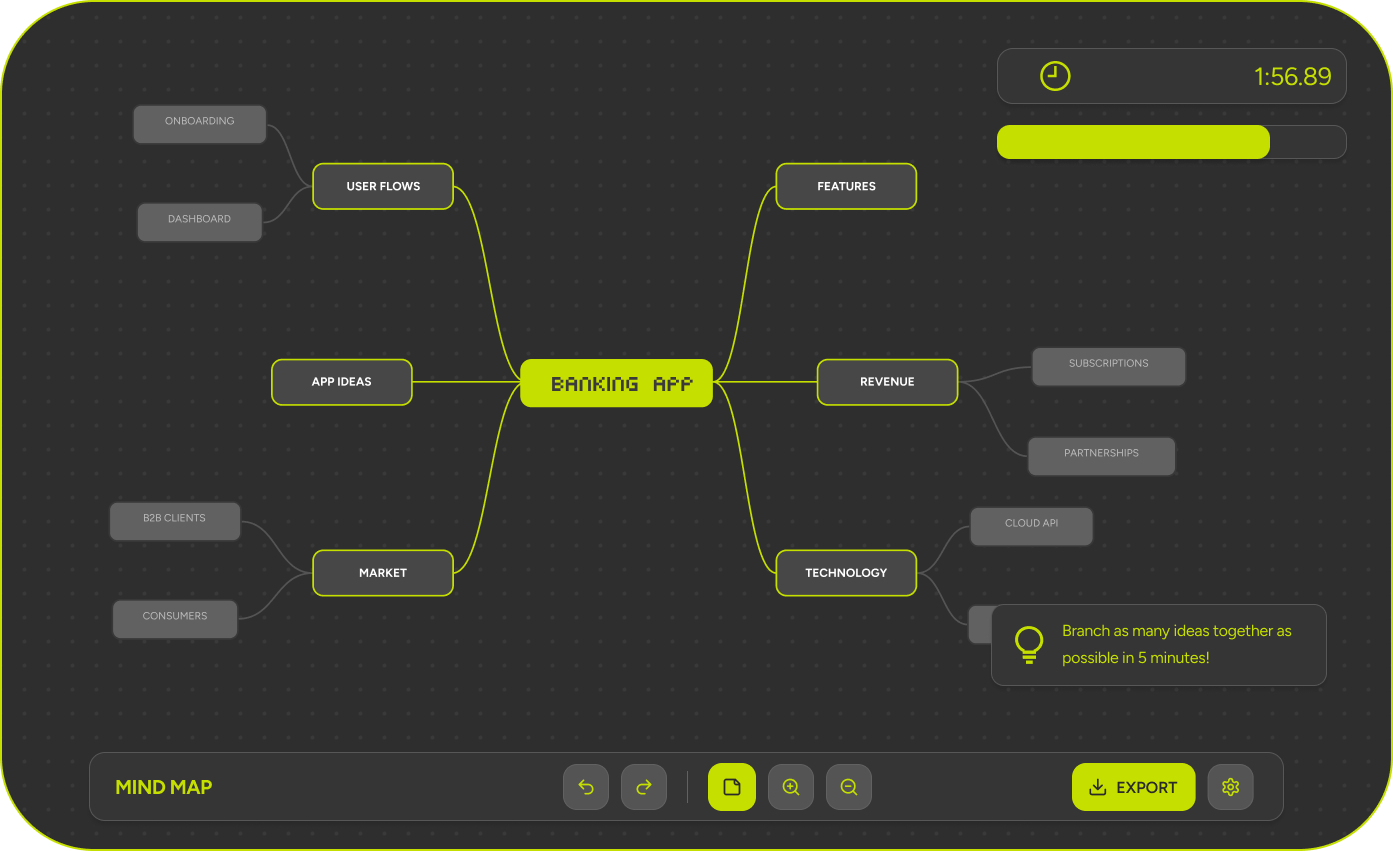
Start with your core idea
Mind mapping is a visual brainstorming technique that helps you explore ideas and their relationships. Start with a central concept and branch out to related ideas.
Write your central idea in the middle
Branch out with related sub-ideas
Connect related ideas with lines
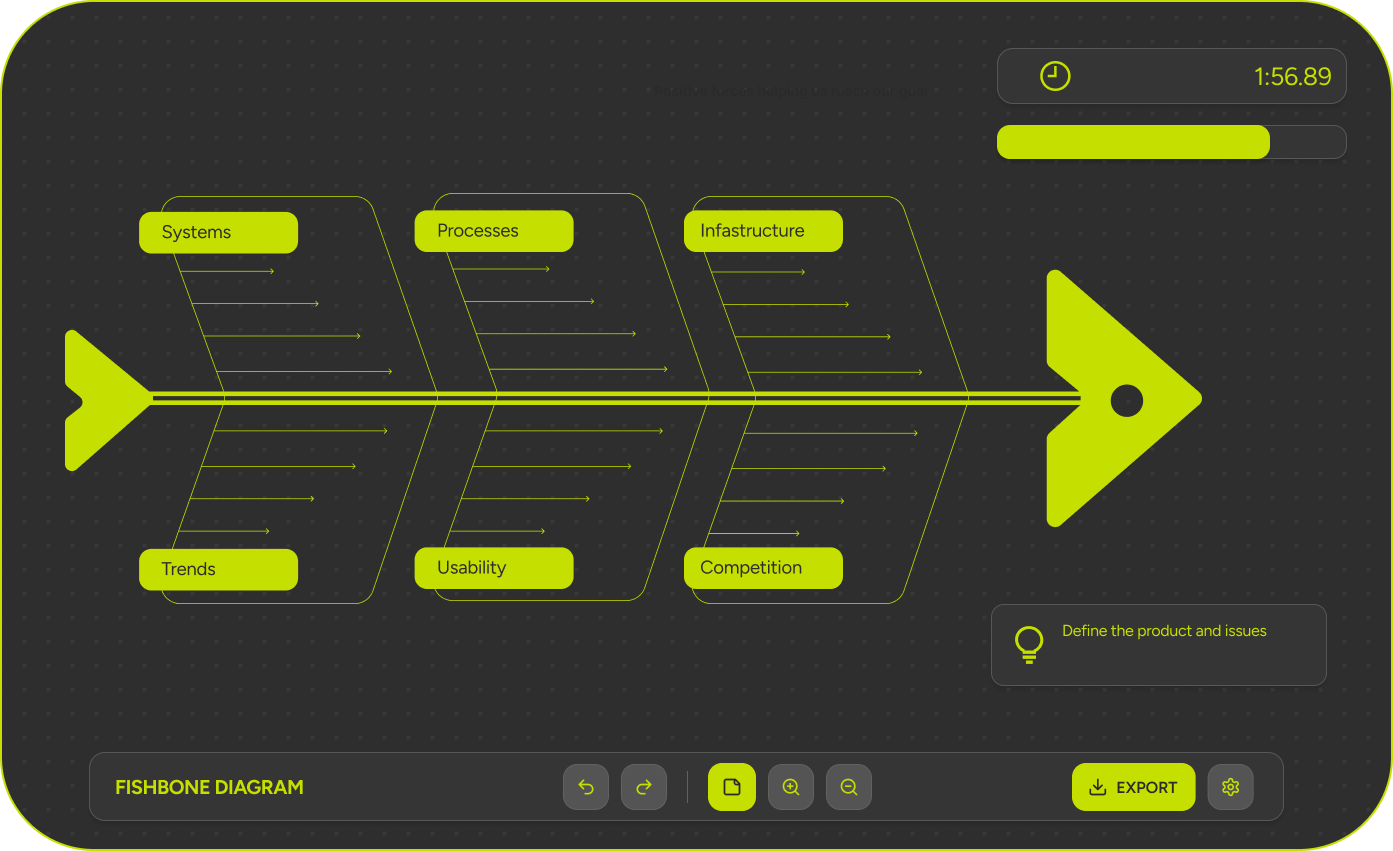
Identify cause and effect
The Fishbone diagram helps you explore causes and effects. Perfect for analyzing problems or understanding complex relationships between ideas.
Define your main issue or goal
Identify major categories of causes
Add specific factors under each category
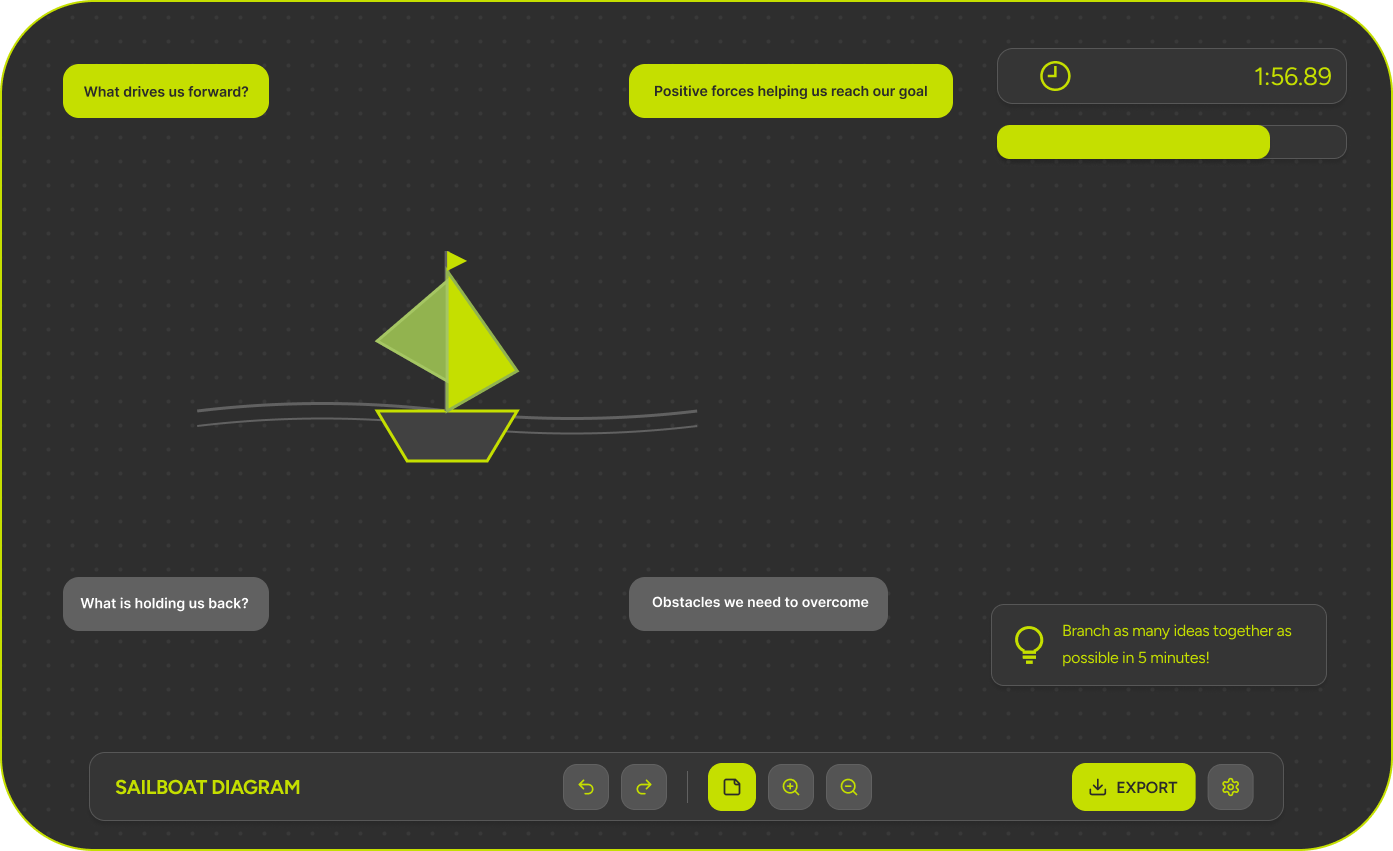
Navigate goals and obstacles
The Sailboat method helps teams reflect on goals, obstacles, and resources. It's a great retrospective tool for understanding what helps or hinders progress.
Define your destination or goal
Identify wind (helping forces)
Identify anchors (obstacles)
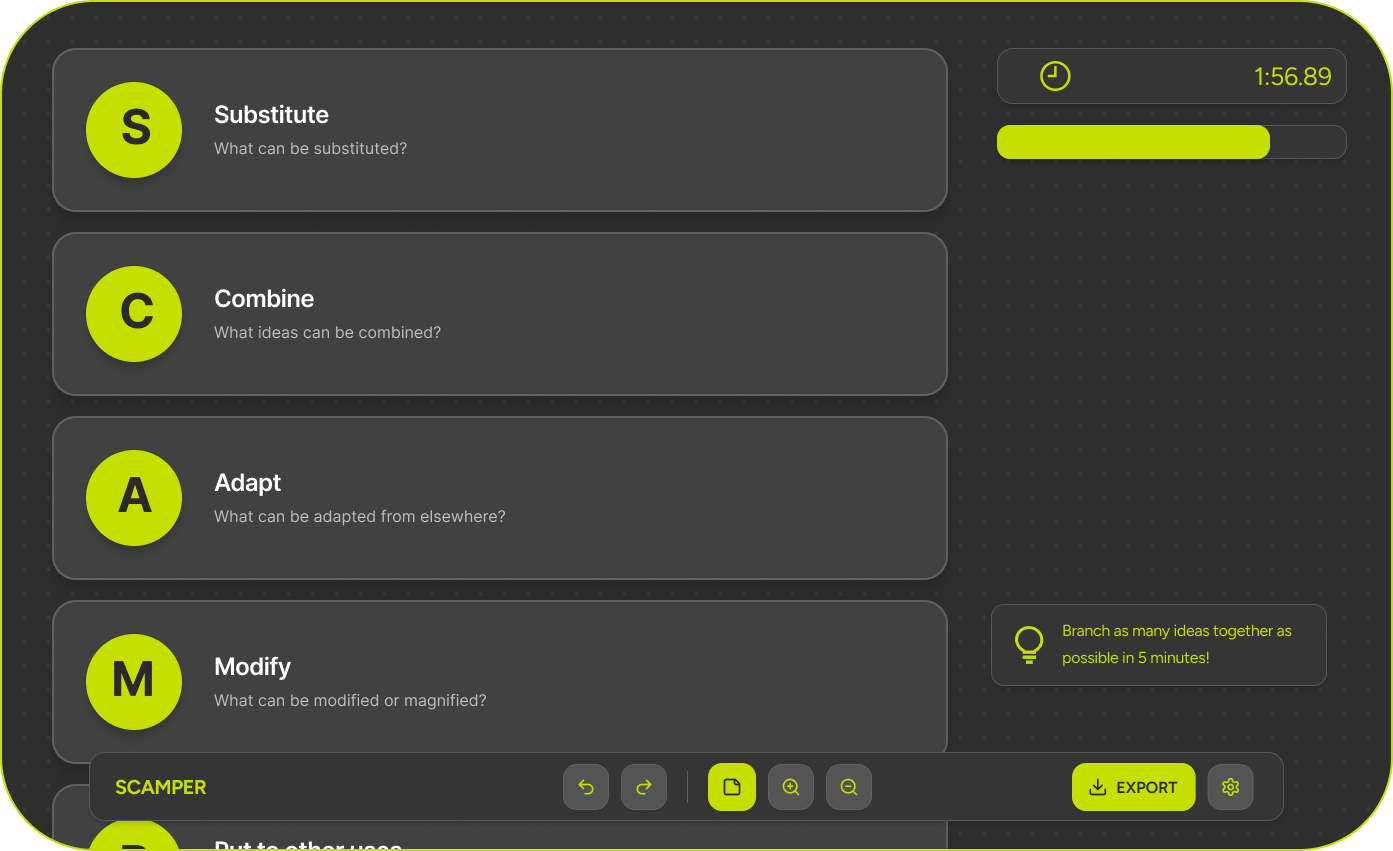
Modify and improve
SCAMPER is a checklist method that prompts you to think about modifications to improve your idea. Each letter represents a different thinking strategy.
Go through each SCAMPER prompt
Note ideas that spark from each prompt
Combine and refine your best ideas
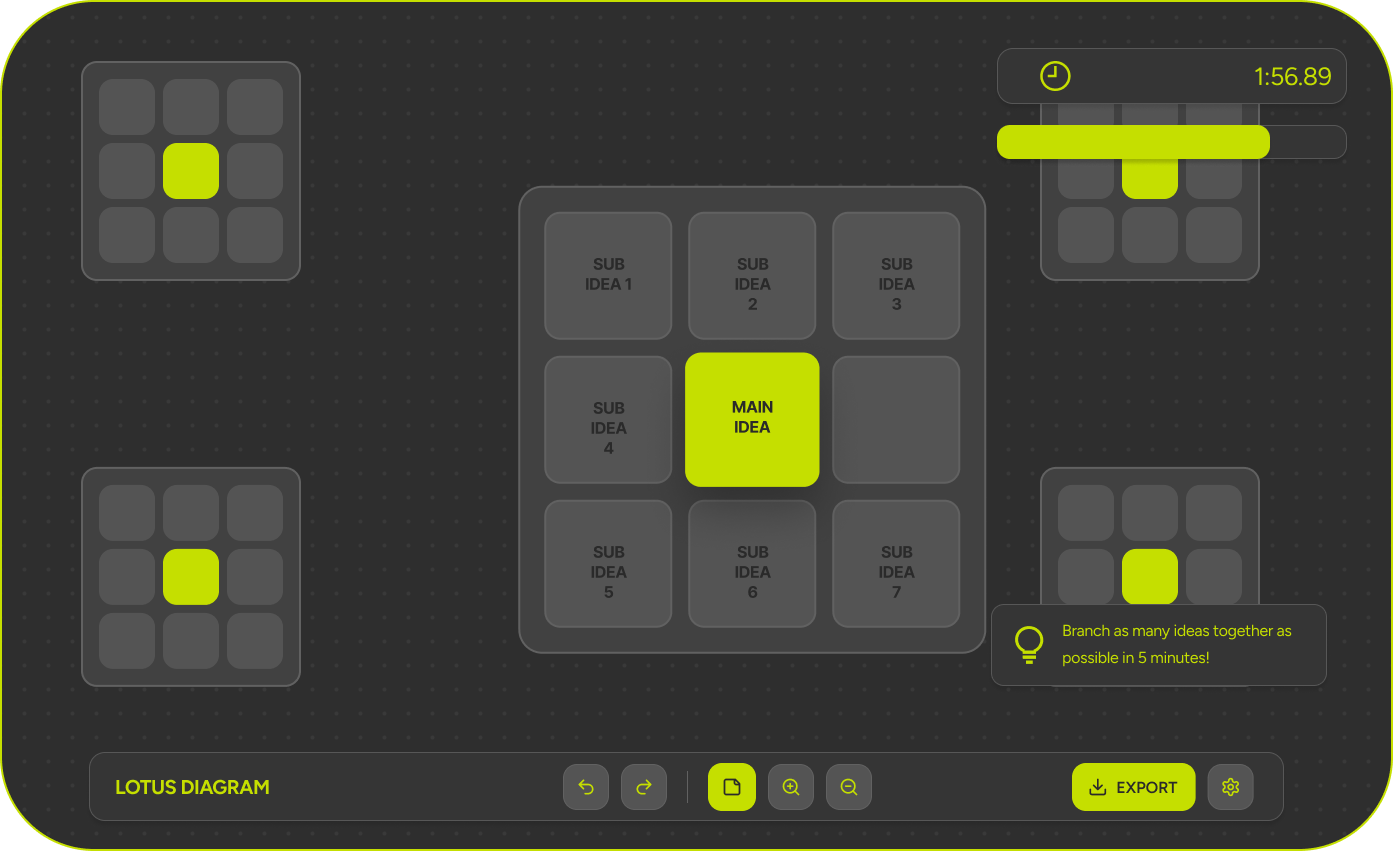
Expand ideas systematically
The Lotus Diagram helps you break down a central idea into manageable sub-ideas. It's perfect for planning complex projects or organizing thoughts.
Place your central idea in the center
Create 8 surrounding boxes for sub-ideas
Expand each sub-idea further
READY TO GET
CREATIVE?
Start your ideation journey today!